Road Cycling: World Tour Race
- 4.1
- Rating
- 1.00M
- Installs
- Free
- Price

 Analysis by App-foxy
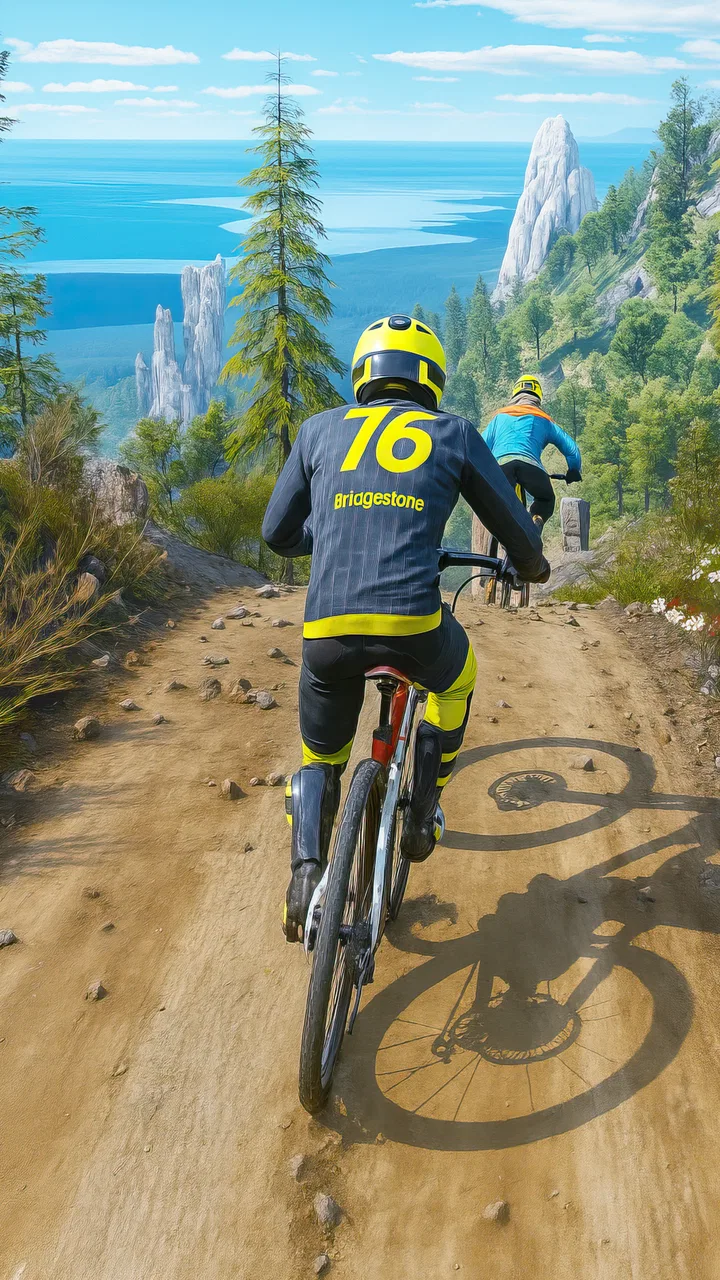
Road Cycling: World Tour Race is a free simulation game built around the appeal of competitive road cycling: choose a rider and bike, take on races in different parts of the world, improve your setup, and return for another attempt at a better result. I found its basic appeal easy to understand because the game does not need a complicated explanation before the first race. You are there to ride, react, and gradually build a stronger collection of riders and bikes.
The game comes from Skyloft Yazılım Bilişim ve Anonim Şirketi and is listed for players aged Teen. It has reached over a million installs and holds a 4.1 average from around ten thousand ratings, which suggests that its straightforward cycling idea has found a sizeable audience. My view is that it works best when treated as a focused pick-up-and-play racing game rather than a full professional cycling management simulator.
Why the first race is easy to understand
The first useful thing to know is that the game’s main activity is racing, not planning an entire season from a desk. The opening appeal comes from getting onto the road quickly and seeing how your selected rider and bike perform. That makes it approachable for someone who enjoys sports games but does not want to study a large rulebook before having fun.
You May Also Like

 Blood Strike: 2.5 Anniversary
Blood Strike’s Loadouts Turn Every Drop Into a Tactical Gamble
A close look at Blood Strike’s custom loadouts: how fast access to signature weapons reshapes its battle royale rhythm, rewards preparation, and narrows the gap between fights.

 Pandora - Music & Podcasts
Pandora’s Music Is Easy to Start, but Harder to Recover
Pandora’s strength is its low-effort path from a seed to a station. Its weak spot is how much confidence it asks you to place in connection, setup, and quiet recovery.

 8 Ball Pool
 Is Built on Rivalries, Rematches, and Routine
A close look at the rivalries, rematches, shared routines, and unanswered safety questions that turn a quick pool match into a persistent mobile community.

 Samsung Music
’s Quiet Strength Is Playing What You Already Own
Its reach comes less from spectacle than from dependable access to a personal library. That simplicity is both the app’s strongest retention engine and its ceiling.

 AccuWeather: Weather Radar
AccuWeather Review: A Quick, Clear Forecast for Everyday Decisions
For everyday plans, the best forecast is the one you can understand quickly. AccuWeather makes rain timing, radar, and local conditions easy to act on, with a few trade-offs.

 Hill Climb Racing
Why Hill Climb Racing Still Turns Crashes Into One More Run
A tiny car, a bumpy hill and one more upgrade: Hill Climb Racing keeps resurfacing because its simple chaos makes every near-miss feel personal.
More From Our News Desk
View All News


The store positions it as a road cycling experience, and that focus matters. This is not a general collection of unrelated sports or a broad vehicle game. The identity comes from the bike, the route, the rider, and the chase for a better finishing position. I like that narrow focus because it gives each session a clear purpose: start a race, make decisions while riding, and see whether the result justifies another attempt.
For a new player, I would begin by paying attention to how the game communicates performance rather than immediately spending resources on every available improvement. The first race is useful as a reference point. Notice which parts of the ride feel difficult, whether your current bike seems limiting, and how much difference a new rider or upgrade appears to make. That early comparison is more valuable than upgrading without a plan.
The game’s free entry point also makes it simple to test. You can install it without committing to a purchase, then decide whether the racing rhythm suits you. The current version is 0.5.0, so I approached it as a developing experience rather than a finished replacement for the deepest cycling games on mobile. That expectation helps: the attraction is the repeatable race-and-improve loop, not an encyclopedic recreation of the professional sport.
The first action: ride before you optimize
I recommend resisting the temptation to treat the upgrade screen as the main game. The most useful early workflow is to race with the equipment you have, identify the point where progress slows, and only then improve the part that seems most relevant. This gives upgrades a practical meaning. Instead of buying something because it is available, you are buying it because a previous race showed you a problem.
That approach also prevents a common mistake in progression games: changing several things at once and then not knowing what helped. If you improve a rider and a bike together, the next result may be better, but the lesson is unclear. Making one meaningful change between attempts gives the feedback more value, especially when you are trying to understand how the game wants you to build your collection.
Another useful habit is to treat riders and bikes as separate decisions. A stronger rider may make a race feel more forgiving, while a better bike may change how confident you feel about the whole setup. I would not assume that the most expensive-looking option is automatically the best choice for every situation. The better question is whether the improvement solves the obstacle you actually experienced.
This is where the game differs from a passive cycling showcase. It asks you to connect the result with the next action. A disappointing finish is not just a loss; it is a prompt to reconsider your combination of rider, bike, and upgrades. That connection gives the opening minutes more purpose than simply repeating the same race without learning anything.
The feedback rhythm keeps the loop moving
The strongest part of Road Cycling: World Tour Race is the rhythm between effort and response. You race, receive a result, unlock or improve something, and then have a reason to try again. That pattern is familiar in mobile simulations, but it works here because the theme naturally supports gradual improvement. A cyclist becomes more convincing when progress is tied to equipment and rider development rather than only to an abstract score.
I found that the best sessions are the ones where I set a small target before starting. It might be reaching a better result with the current setup, testing a newly unlocked rider, or deciding whether an upgrade is worth the cost. A small target makes the race feel like an experiment. Without one, repeated attempts can blur together and the game risks becoming a sequence of similar runs.
The feedback is also useful because it encourages you to separate two kinds of failure. Sometimes a result tells you that your current setup needs improvement. Other times, it may simply show that you have not yet found the most comfortable way to handle the race. Those situations call for different responses. Spending immediately may solve the first problem, but practice or a different choice may be better for the second.
The important question after every race is not only “Did I win?” but “What changed my result?” That mindset turns the game from a disposable time filler into a modest skill-and-progression exercise. It is a particularly good fit for players who enjoy seeing a collection grow while still wanting each race to provide an immediate test.
How to make upgrades feel worthwhile
Upgrades are most satisfying when they mark a clear before-and-after moment. I would keep a mental note of the setup used in a difficult race, then compare it with the first attempt after an improvement. If the change does not feel meaningful, avoid stacking more purchases immediately. Give yourself another race so you can judge the effect under similar conditions.
There is a trade-off here. Progression can make the next session more inviting, but it can also make the player focus more on collecting than riding. The game includes in-app purchases ranging from $1.99 to $99.99 per item, so anyone who enjoys the loop should decide early how much they want to spend. I would treat paid items as optional accelerators, not as a reason to rush through the part of the game that is supposed to provide the satisfaction.
For younger players, the Teen content rating is worth taking seriously, and purchases should be protected through the device’s normal controls. Even when a game is free to download, the presence of optional items means that a shared phone or tablet deserves a little preparation. This is not a criticism of the cycling concept; it is simply sensible management for a progression game with paid choices.
The most rewarding use of the upgrade system is to build a personal routine. I would choose one rider to learn properly, use a consistent bike for comparison, and change only one element when testing progress. That makes improvement easier to notice. Players who prefer collecting everything immediately may enjoy a different approach, but methodical testing gives the loop more depth than opening options at random.
Unlocking riders and bikes changes the reason to return
Unlocking new riders and bikes provides the clearest bridge between one race and the next. A new option is not merely another item in a menu; it gives you a reason to revisit a route with a different expectation. Even when the result is not immediately better, experimenting with a new combination can refresh a familiar session.
I would use new unlocks as controlled trials rather than automatic replacements. First, race with the option that already feels dependable. Then try the new rider or bike and compare the experience. This keeps the reward connected to actual play. If the new choice performs differently, you learn something; if it does not suit you, you have not abandoned your reliable setup too quickly.
This approach is especially useful for players who enjoy simulation games because it preserves a sense of cause and effect. The game does not need to be a detailed management spreadsheet to make choices matter. A small collection can still feel personal when you remember why each rider or bike earned a place in your rotation.
The reset after a race is part of the appeal
Every session eventually resets when the race ends. That reset is not a weakness by itself; it is what makes another attempt possible. You get a clean chance to apply what you learned, test an improvement, or chase a result that was just out of reach. The loop is simple: action on the road, immediate feedback, a reward or lesson, then a fresh start.
I think this structure suits short breaks particularly well. Imagine having a few minutes before leaving home or while waiting for an appointment. You can complete a race, check what became available, and stop without needing to remember a complicated campaign state. Later, the next session begins with a clear question: can the new setup do better?
That same structure may frustrate players looking for a long-form cycling career with extensive team administration, realistic season planning, and a large strategic layer between races. Road Cycling: World Tour Race is better suited to someone who wants the physical idea of racing and upgrading to remain close to the surface. If your favorite part of cycling games is managing contracts, tactics, or a detailed calendar, a dedicated management alternative would probably serve you better.
The reset also exposes the game’s main risk: repetition. If the races do not feel meaningfully different to you, the reward may not be enough to sustain interest. I would avoid playing for too long in one sitting unless each attempt has a specific purpose. Shorter sessions make the feedback clearer and reduce the chance that the loop starts to feel like routine clicking.
Who will enjoy the repeat attempt?
I would recommend this game to players who like accessible sports simulations, collectible progression, and quick races with a clear next goal. It is a good match for someone who wants to improve a bike, unlock a rider, and immediately test the result. It also works for casual players who are curious about road cycling but do not want the complexity of a full simulation.
It is less suitable for anyone who dislikes repeated attempts or prefers every session to introduce a completely new activity. Players who want highly detailed realism should also keep their expectations measured. The game’s appeal comes from its compact loop, not from replacing every aspect of professional cycling.
Compared with a traditional arcade racer, this game places more emphasis on rider and bike progression. Compared with a cycling manager, it keeps the player closer to the race and further from administration. That middle position is its most useful identity. You get enough development to make the next attempt meaningful, while the central activity remains easy to reach.
It is also a reasonable choice for someone who wants to try before paying. The game is free, supports devices running Android 8.0 or later, and the download decision is therefore relatively low risk. The more important question is whether you enjoy its particular rhythm. If you need a game with a deep offline career, extensive customization, or a highly technical simulation model, this may not be the right destination.
My verdict on the action, reward, reset loop
Road Cycling: World Tour Race succeeds when it keeps the connection between racing and improvement visible. You take the first action by entering a road race, receive feedback through the result and the feel of your setup, earn a reason to continue through upgrades or unlocks, and then reset for another attempt. That sequence is easy to understand, but it becomes more satisfying when you use each race to test one deliberate change.
I appreciate that the game can be enjoyed in short sessions without demanding a large time commitment. The worldwide racing theme gives the activity a sense of travel, while the rider-and-bike progression gives the next session a practical purpose. Its free price makes experimentation easy, though the in-app purchase range means players should set their own spending boundaries rather than letting progression make the decision for them.
My main reservation is that the loop depends heavily on how much you enjoy repetition. If a modest improvement or a newly unlocked option is enough to make you curious, the game can keep pulling you back. If you need major variety between races, the same structure may lose its charm faster. The current version is still early enough that I would judge it primarily on this core experience rather than expect the breadth of a mature cycling platform.
Overall, I see it as a friendly entry point into road cycling simulation on mobile: focused, easy to pick up, and built around the satisfying question of whether the next setup will perform better. I would recommend it to a friend who enjoys short competitive sessions and gradual collection building. I would skip it for a friend seeking a detailed team-management game, but for the right player, Road Cycling: World Tour Race makes “one more race” understandable: there is always a result to improve, a choice to test, or a new setup waiting for its first serious run.
FAQs for Road Cycling: World Tour Race
01What is Road Cycling: World Tour Race?
Road Cycling: World Tour Race is a cycling game focused on competitive road racing and the atmosphere of professional tours. Players can take part in demanding stages, manage their rider’s effort, and compete for better results across different routes. The experience is designed for fans of cycling who enjoy strategy, endurance, and the challenge of finishing ahead of the peloton.
02How does the gameplay work?
The game combines direct racing controls with tactical decisions. During a stage, you generally need to balance speed, stamina, positioning, and timing rather than simply holding the acceleration button. Staying with the group, choosing when to attack, and managing energy before climbs or final sprints can make a significant difference. New players may need a few races to understand the pace and controls.
03Can I play Road Cycling: World Tour Race offline?
Offline availability may depend on the specific version and feature being used. Basic races or previously downloaded content may work without a constant connection, but online competitions, rankings, advertisements, cloud saves, and certain progression features can require internet access. It is best to check the game’s store description and test the main modes after installation, especially if you plan to play while traveling.
04Is Road Cycling: World Tour Race free to download?
Road Cycling: World Tour Race may be available as a free download, although the exact model can vary between Android and iOS. Free versions can include advertising, optional purchases, or systems that help unlock upgrades and additional content more quickly. Before downloading, review the store listing for current pricing, in-app purchase details, supported devices, and any age or account requirements.
05What devices are recommended for the game?
The game should run on many relatively modern Android and iOS devices, but performance can differ depending on processor power, available memory, operating-system version, and screen resolution. Older phones may experience longer loading times, reduced visual quality, or occasional stuttering during races. Keeping sufficient storage free and closing demanding background apps can help provide smoother controls and better battery performance.
Pros
- Realistic routes inspired by famous World Tour cycling locations.
- Simple controls make it easy for beginners to start racing.
- Short events fit well into quick gaming sessions.
- Bike upgrades add progression and encourage repeated play.
- Offline play may be useful when traveling or lacking stable internet.
Cons
- Limited bike and rider customization can reduce personalization.
- Difficulty may feel uneven across certain races and opponents.
- Repetitive courses can make longer play sessions feel monotonous.
- Performance may vary on older phones or lower-end tablets.
- Some upgrades or content may require in-app purchases.

Road Cycling: World Tour Race
Gallery